Manchester, United Kingdom
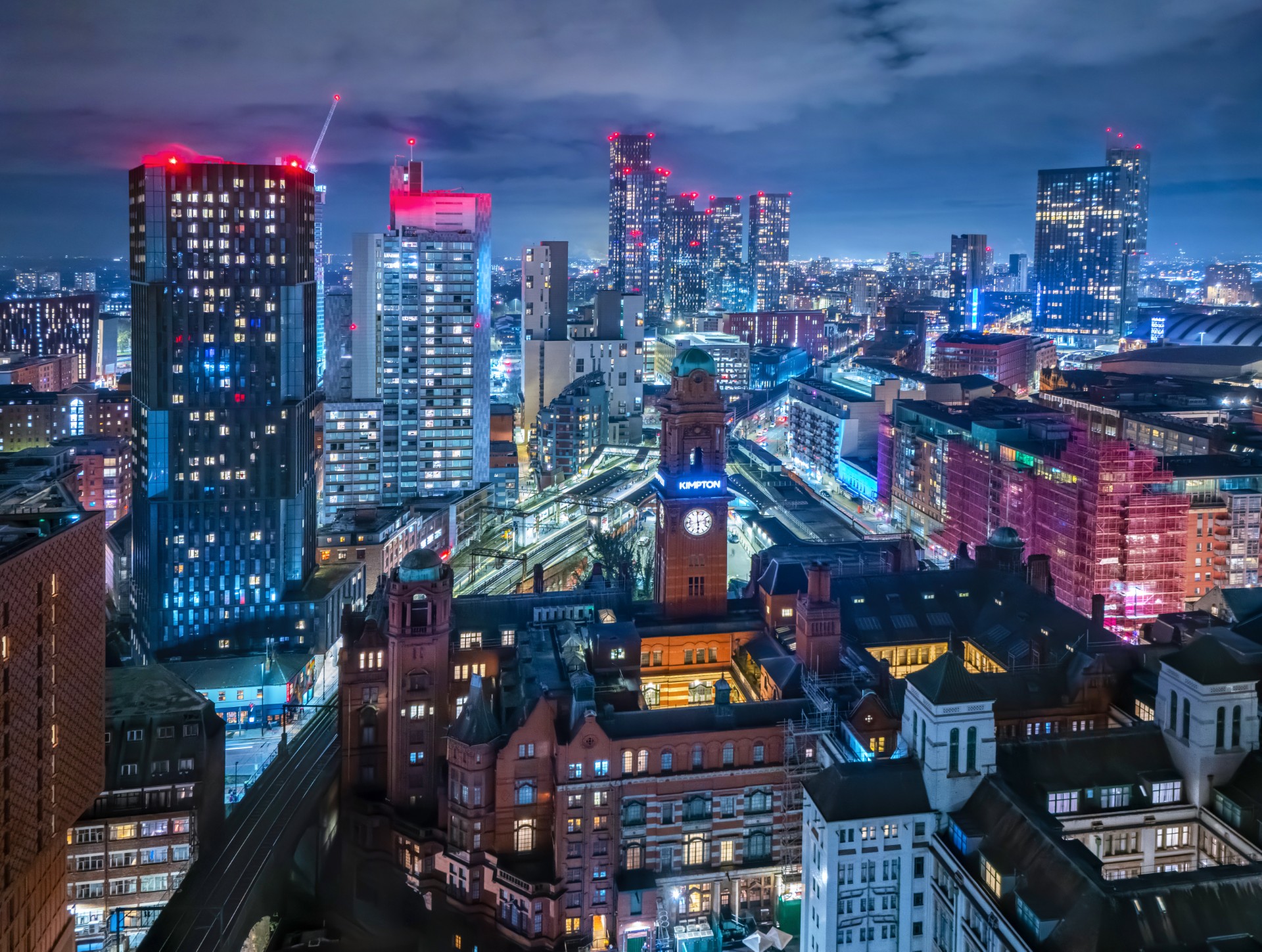
Image: Manchester skyline at night

Manchester grew rapidly during the Industrial Revolution in the 18th and 19th centuries. Its location near rivers and coalfields helped it become a major centre for textile manufacturing. The city became famous for its cotton mills and was sometimes called “Cottonopolis.” The opening of the Bridgewater Canal in 1761 and later the railway helped Manchester become an important centre of trade and transport.
During the 19th century, Manchester also became known for political and social reform. The Peterloo Massacre of 1819, when soldiers attacked a peaceful political gathering, became an important event in the history of British democracy.
In the 20th century, many traditional industries declined, but Manchester continued to develop as a centre for education, culture, music, sport and business. Today, it is one of the United Kingdom’s largest and most influential cities, known for its universities, football clubs, music scene and industrial heritage.
Geographic Coordinates
Latitude, Longitude: 53.4809, -2.23743
Population
Approximately 605,500; over 2.85 million in wider metropolitan region.
Currency
GBP (Pound)
Sources
ChatGPT
Google AI
Wikipedia
Office for National Statistics