Heidelberg, Germany

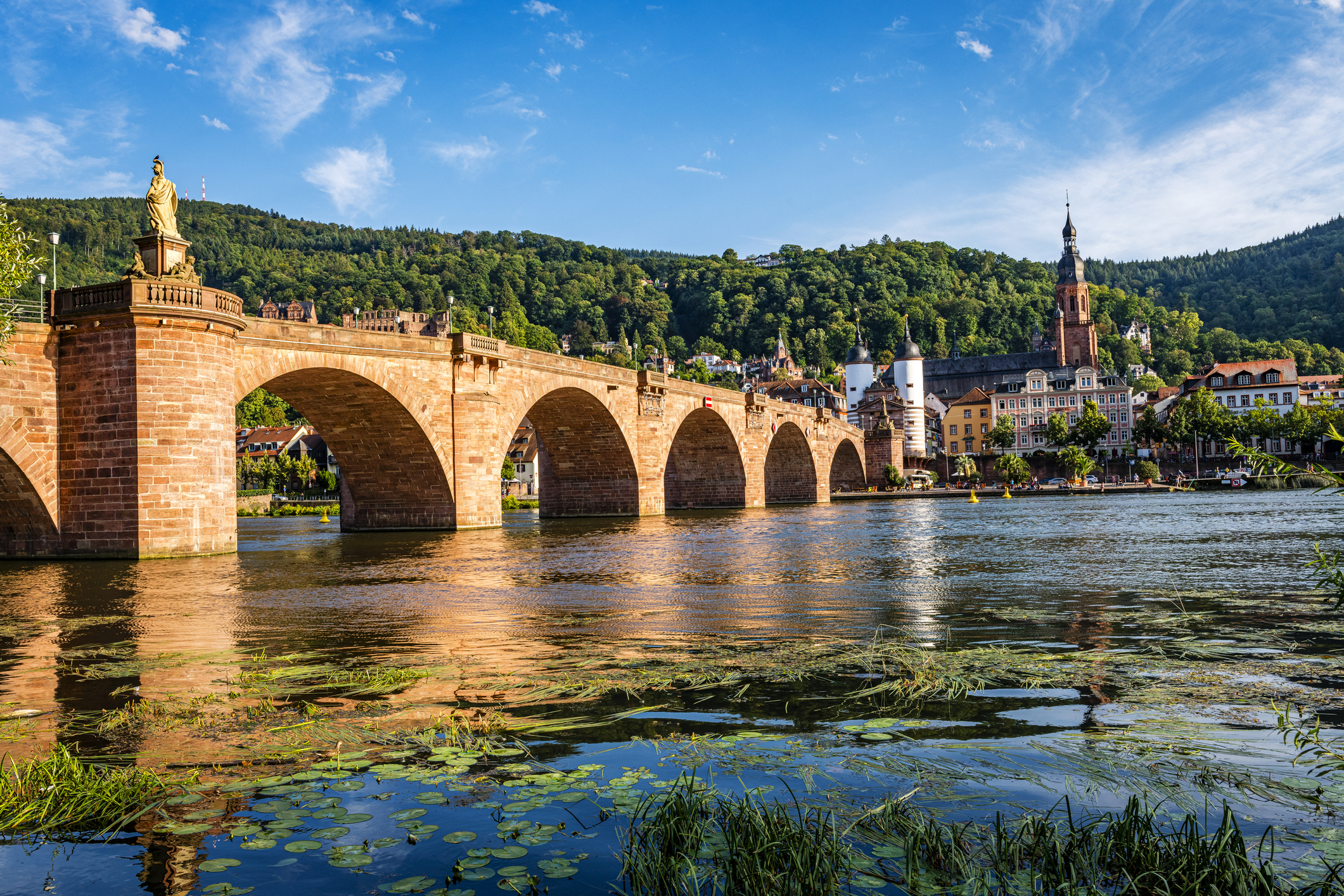 Image: The Old Bridge over the Neckar River, Heidelberg

Latitude, Longitude: 49.4077, 8.69079
Early settlements date back to Roman and Celtic times but the first recorded reference to Heidelberg - spelt 'Heidelberch' - is dated 1196, on a document from Schönau Abbey. The majority of the Old Town was planned and built during the 13th century. The city sits on the banks of the River Neckar in southwestern Germany, close to the borders with France and Switzerland.
The Heidelberg coat of arms features a crowned golden 'Palatinate lion' - connected to the Counts Palatine of the Rhine and the Wittelsbach family - standing on three green hills against a black field. It adorns many historic buildings and monuments throughout the city. The Brückenaffe or 'Bridge Monkey,' a quirky bronze statue perched on the historic Old Bridge, is also a famous symbol and landmark of Heidelberg. The depiction of a monkey holding a mirror represents the city's spirit, humour and cultural identity.
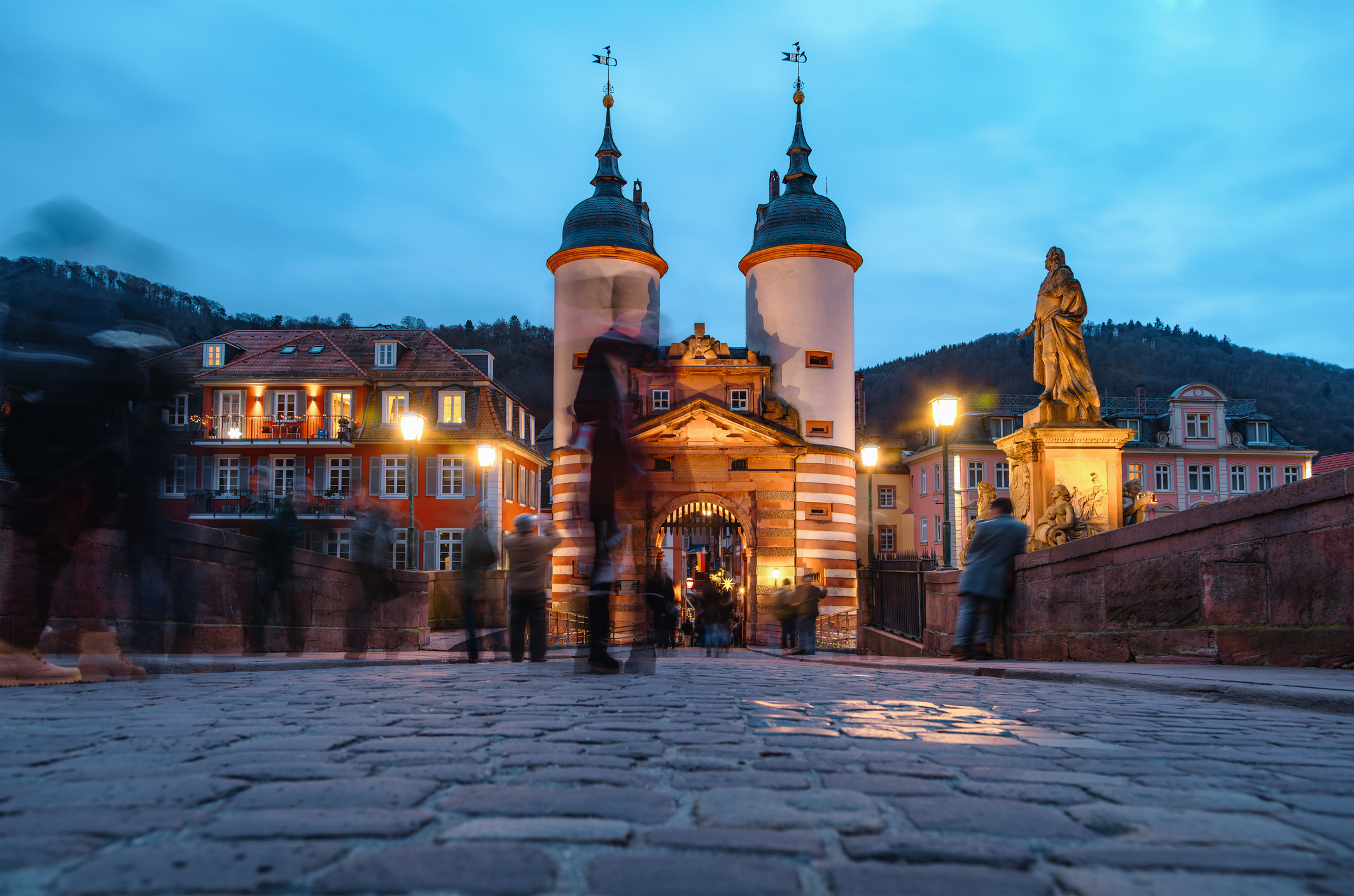 Image: Old Bridge Gate and Minerva Monument, Heidelberg
Heidelberg University, officially known as the 'Ruprecht Karl University of Heidelberg,' is a public research university and the oldest university in Germany, established in 1386. All major international rankings place the University in the global top 100, ranking it third position in Germany and amoung the top 15 in Europe. Its particular strengths are in the life sciences, physics, archaeology and the humanities.
In addition, the city is also home to other internationally-recognised scientific institutions, including the headquarters of the European Molecular Biology Laboratory (EMBL) - which has six sites across Europe - and the German Cancer Research Center (DKFZ), the largest biomedical research institution in Germany. DKFZ is part of the Helmholtz Association of German Research Centres which is dedicated to advancing cancer research.
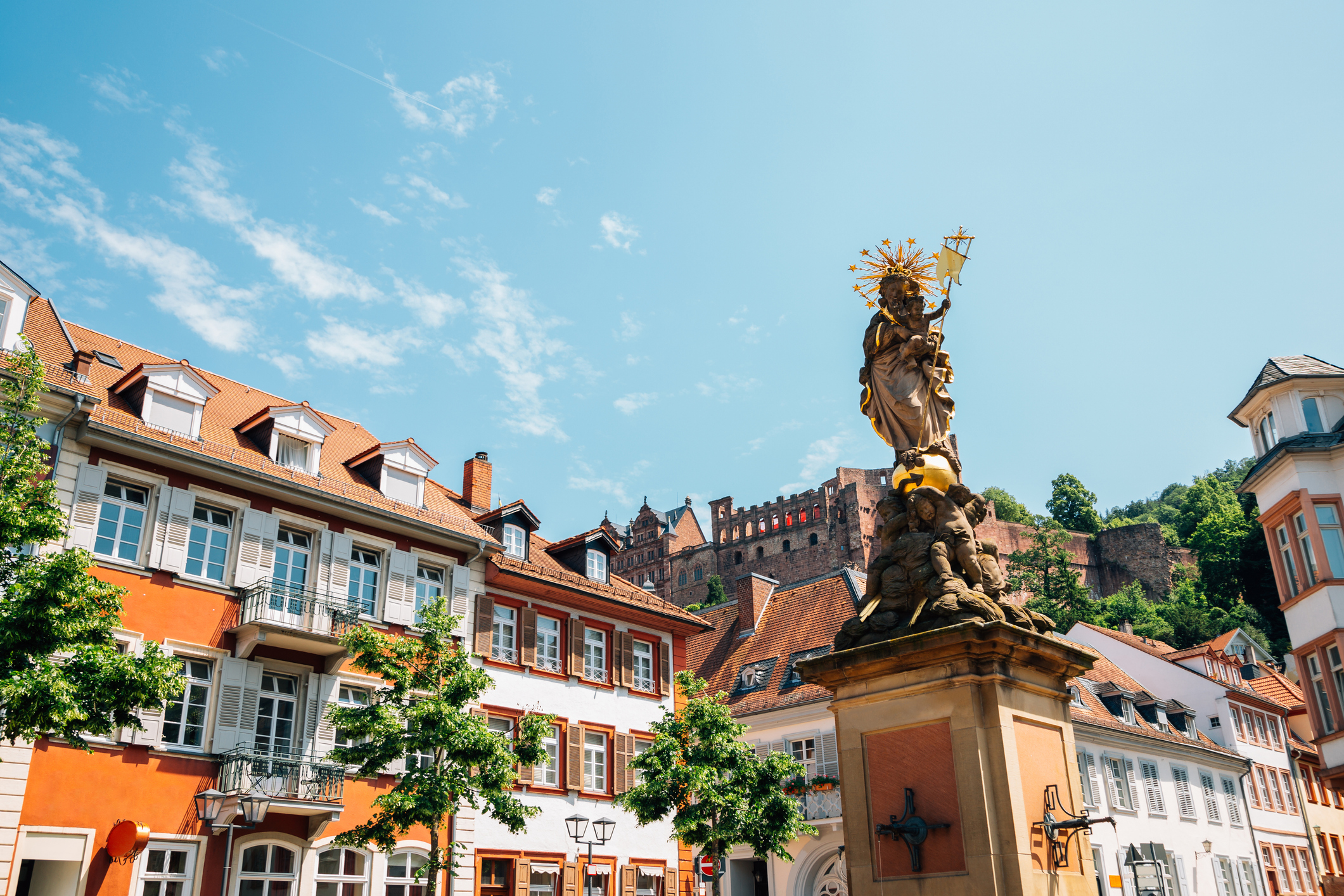 Image: Kornmarkt Square and Heidelberg Castle in the Old Town, Heidelberg
Heidelberg was officially designated a 'UNESCO City of Literature' on 1 December 2014, becoming the first city to form part of the UNESCO Creative Cities Network. The city's literary traditions span over 700 years, predominantly through the academic and cultural endeavours of Heidelberg University and the Bibliotheca Palatina - or 'Palatinate library' - which was the most important library of the German Renaissance.
Whilst steeped in history, Heidelberg is also a modern progressive city. This is seen nowhere more clearly than the emergence of a new district – 'Bahnstadt' – on a 116-acre abandoned freight yard, a 10–15 minute walk from Heidelberg Central Station. The primary development of this new quarter was completed in 2022, creating the world's largest passive housing settlement. 100% of the energy powering Bahnstadt's residential, commercial and public buildings comes from renewable sources.
Population
Approximately 160,000.
Currency
EUR € - Euro
Sources
Heidelberg University, Heidelberg Marketing GmbH, Britannica, Wikipedia, C40 Cities, European Molecular Biology Laboratory (EMBL), German Cancer Research Center (DKFZ), UNESCO