Edinburgh, United Kingdom

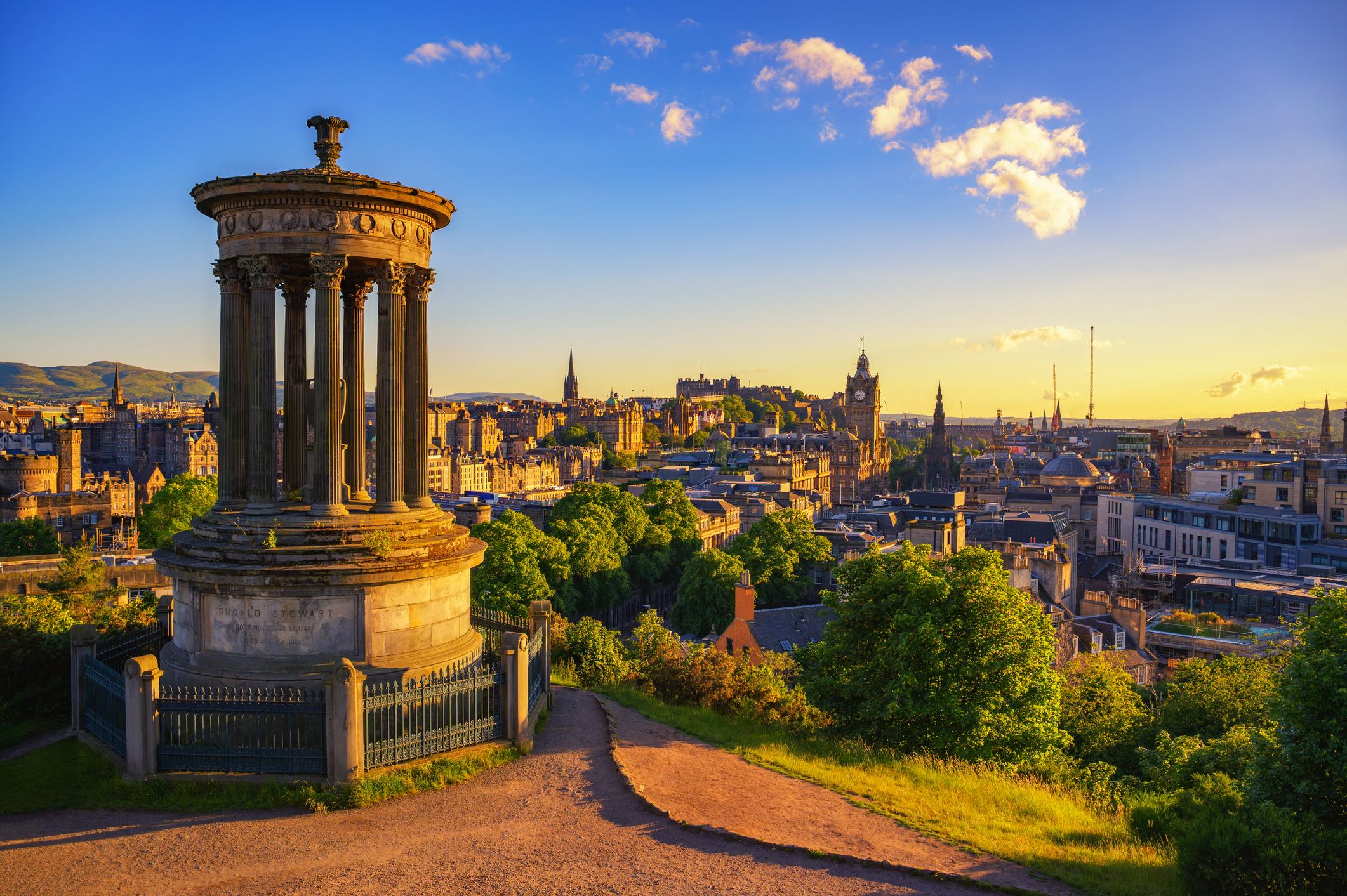 Image: Edinburgh skyline from Calton Hill

Latitude, Longitude: 55.9521, -3.19648
Human settlements date back to c.8,500 BC but one of the most important periods in the making of modern Edinburgh is 1124–1127, when it became an official 'royal burgh' during the reign of King David I. A confirmation charter granted by the King to Dunfermline Abbey contains the earliest written reference to "my burgh of Edinburgh" (burgo meo de Edinesburg).
The medieval Old Town grew along the ridge below Edinburgh Castle, then the city developed across the valley towards the coast in the 18th Century with the development of the Georgian New Town. The Old Town and New Town of Edinburgh were designated a UNESCO World Heritage Site in 1995.
The city has a turbulent history, switching rule between England and Scotland numerous times over the centuries. However, this all came to an end when the two countries formally united on 1 May 1707 under the Act of Union, creating the Kingdom of Great Britain. Present-day Scotland has a high degree of self-governance through the Scottish Parliament, formed in 1999, which is located in the Holyrood area of Edinburgh.
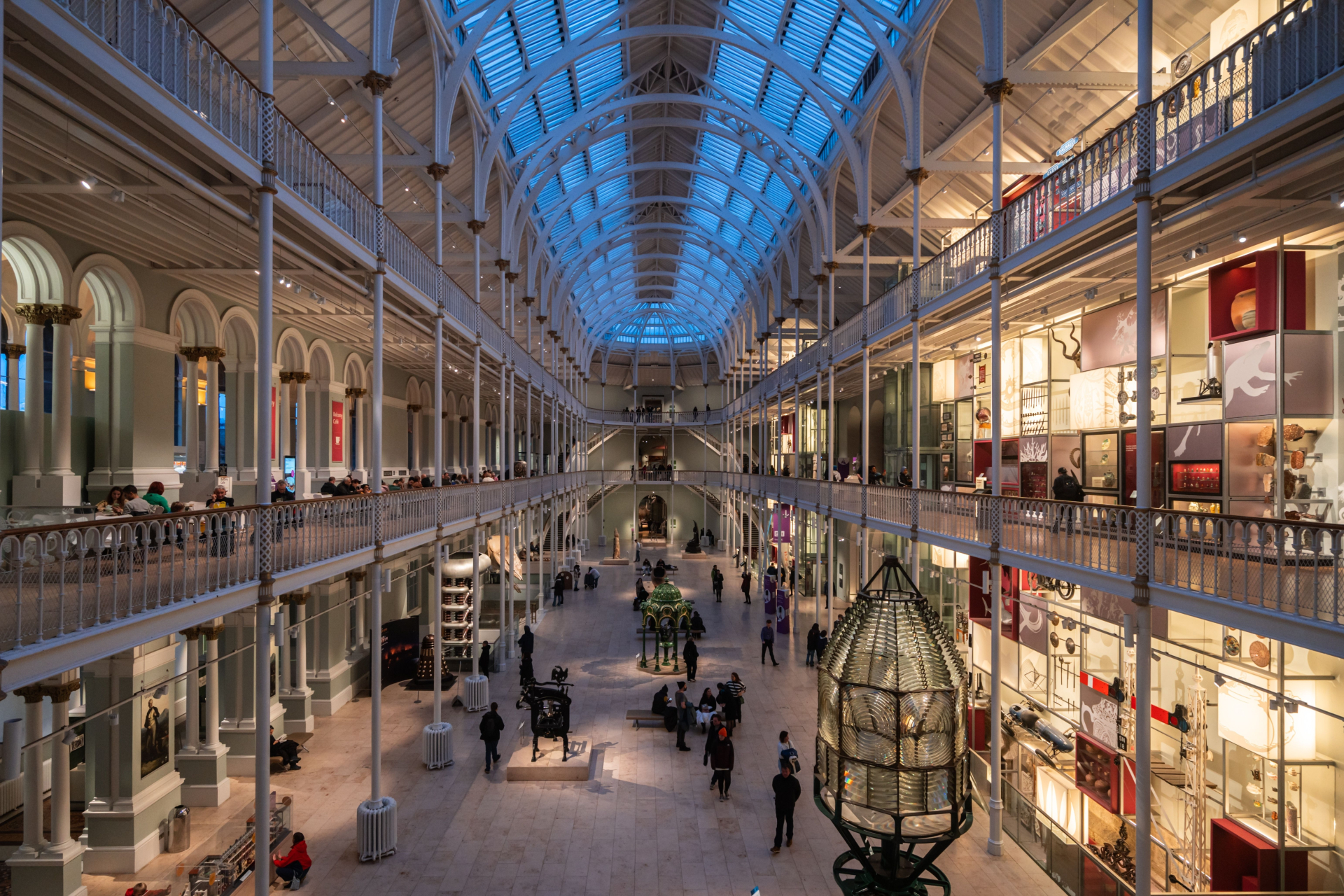 Image: National Museum of Scotland, Edinburgh
Edinburgh is widely known as a 'The Festival City', hosting a year‑round programme of cultural events across art, science, theatre, music, film and literature. There are 11 major annual festivals, including the world‑famous Edinburgh Festival Fringe, Edinburgh International Festival, Royal Edinburgh Military Tattoo and Edinburgh Science Festival.
Edinburgh was named the world's first UNESCO City of Literature at a ceremony in Paris, France, in 2004. It has been home and inspiration to countless poets and authors, including Robert Burns, Sir Arthur Conan Doyle, Ian Rankin, Irvine Welsh and J.K. Rowling, who famously wrote the early Harry Potter novels in the city's cafes.
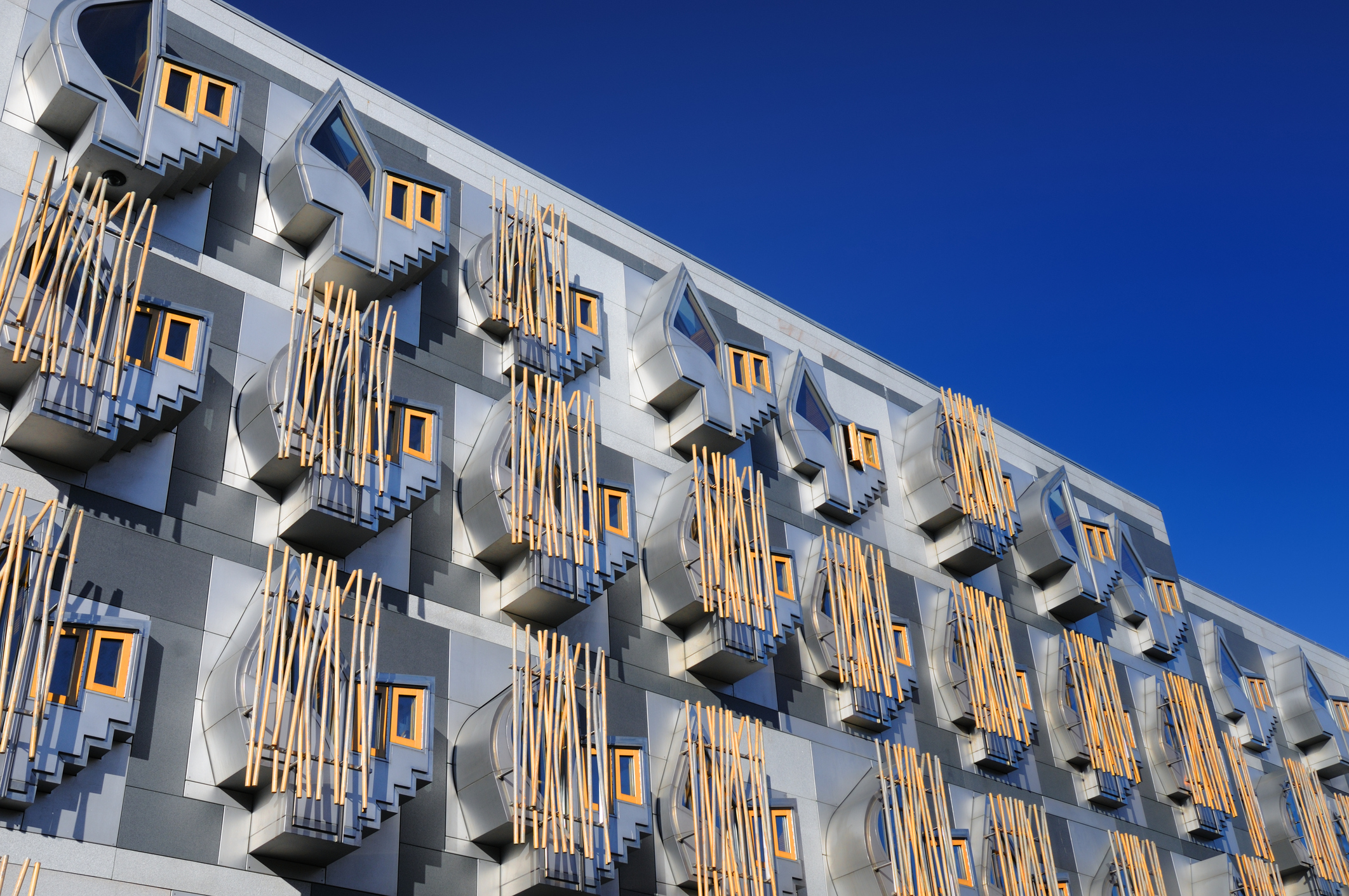 Image: Scottish Parliament Building, Edinburgh
Edinburgh is home to a rich ecosystem of national and local museums, galleries and other cultural institutions, including Edinburgh Castle, National Museum of Scotland, National Galleries Scotland, Royal Botanic Garden Edinburgh, City Art Centre, Collective Gallery, Dovecoat Studios, Royal Lyceum Theatre, Usher Hall and National Theatre of Scotland.
Leading local academic institutions, offering higher education, include the University of Edinburgh, Heriot‑Watt University and Edinburgh Napier University.
The city has a diverse range of parks and recreational spaces which are among the best in the UK. Among the best are Princes Street Gardens, The Meadows, Calton Hill, Dean Village, Portbello Beach, Holyrood Park and Arthur's Seat.
Edinburgh is also a capital for Scottish sport. The city's Murrayfield Stadium - officially the 'Scottish Gas Murrayfield Stadium' - is the largest stadium in Scotland and serves as the headquarters for Scottish Rugby. It also hosts the Scotland national rugby union team during the Six Nations and is home to the professional club side Edinburgh Rugby.
The city is home to two major professional footballs teams: Heart of Midlothian FC based in Gorgie area and Hibernian FC based in Leith. Both teams play in the Scottish Premiership.
Scotland is also known as the birthplace and home of modern golf. Edinburgh and the wider East Lothian area carries on this tradition and reputation with a wide range of local courses, from free pitch-and-putt layouts to prestigious championship parklands.
Population
Approximately 531,370; over 900,000 in wider metropolitan area.
Currency
GBP £ - Pound
Sources
The City of Edinburgh Council, Forever Edinburgh, VisitScotland, Edinburgh World Heritage, Scottish Pariliament, Britannica, Historic England, National Trust, Wikipedia, UNESCO, National Records of Scotland, Office for National Statistics